
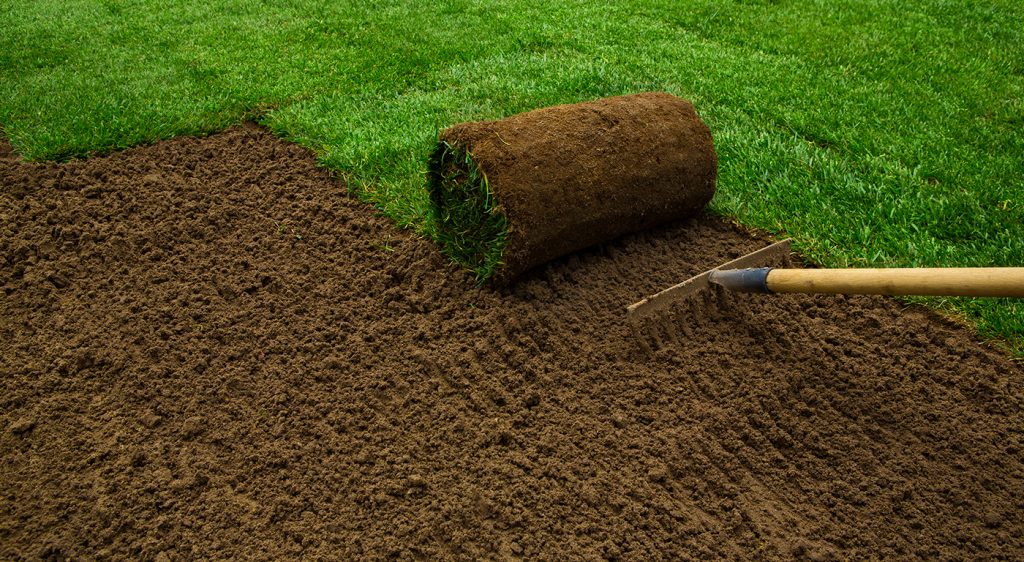
Laying turf, in a well-prepared area of soil, can create an “instant” grass lawn – perfect for those who don’t want to wait for grass-seed to blossom and the process of lawn growth during Spring and Summer. However, like any horticultural project, preparation is key to making sure that your new lawn is sustainable. It is easy to forget that turf is simply a roll of very young, small and delicate grass plants, that:
- Have had their roots cut off
- Have often been transported a long way in a hot environment, and
- Are about to be put on top of a new, strange soil that is probably very different to what it is used too
Taking the above into account, we need to plan to make sure we can make best use of our new turf.
Site quality – new turf’s foundation
The first element to consider is the quality of the site, where new turf is to be laid.
Make sure that any other activities that will disturb the site have been finished, such as:
- Planting trees
- Laying electrical cables
- Laying water pipes
- Working on, or repairing, paths and patios
Think of turfing in the same way as you would carpet fitting; it should be done when all the building work and decorating is finished. With turfing, if you dig some bits up, it is very unlikely that you will be able to get hold of matching turf, so it may look different for many years and it grows and blends in with the existing grass in your garden.
Once the site is clear, we can look at the soil preparation. We may need to import soil and if this is the case, we need to make sure we understand the type of soil we are buying.
Topsoil, subsoil and preparation for laying new turf
Ideally our topsoil and subsoil should look something like this:
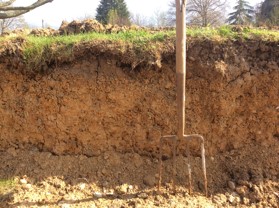
The top 150mm-200mm of topsoil overlying subsoil, which is not compacted and has a nice range of cracks and capillaries, which are critical for water and air movement, which also allow the roots to penetrate to depth.
If your soil has become compacted because of building works or machinery, now is the time to break it up and let it resettle before the turf is laid.
One of the biggest mistakes made is to deliberately compact the soil by bashing it down or rolling it. This simply destroys what we call the “soil structure” and creates a substance that will not allow the grass to grow and will prevent water from draining away.
Ideally the surface should be prepared and then left to settle naturally, for a long as possible.
Ordering turf – what to consider
If you are turfing yourself, your turf supplier will help you with the measurements, to make sure you order the right amount – please remember to order 10% extra to allow for cutting. Be warned that many turf suppliers will use turfing from different sources on different days and this may mean that if you buy it in two different lots, you may end up with different qualities of turf.
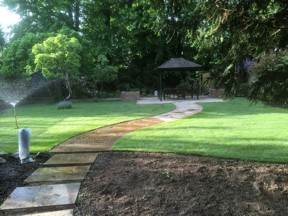
Once turf is laid, it really does not need to be continuously stamped on, to bind it to the soil – remember: grass plants are delicate and you do not treat bedding plants with abuse! A thorough watering will settle the turf to the soil and it should be well-watered for the first few days. However, it does not need soaking or flooding, as this will wash-out nutrition from the roots.
After a few days, the watering can be reduced to a consistency of nice and damp, as there is no simple calculation as to how much, as it will depend on soil type and time of year.
The new turf will need nutrition to help it establish. Although there are lots of myths about not applying nutrition to new or freshly laid plants (especially turf), but the plants will need help to re-establish their root system, at a time when they are very stressed. We do need to be concerned about what fertiliser application we use, especially in hot weather, but as always, advice should be sought from a reputable turf supplier – let’s discuss your plans for re-turfing your lawn.
“Start cutting your new lawn as soon as it reaches approx 40mm and trim it regularly, no shorter than 25mm and make sure your mower blade is sharp.”
Over the last few years there has been issues with turf supplies. This has been due to the hot weather, where the establishment of new grass seed has been very difficult and this has meant that turf has been in short supply. What is available is very difficult to handle due to the lack of roots that help bind the soil to the grass. We would advise that you have a look at what your supplier has, before you commit.
“Better still, order your turf from Perfect Ground Solutions and we’ll prepare the ground beforehand and lay it for you.”
Contact us on 01920 461 958 or email us at info@perfectgroundsolutions.co.uk. Why not find out more about us or review our case studies. We look forward to working with you!