
As we move through the spring and in towards the summer, we’ve certainly been seeing enough rain! The weather generally has been cool and we’ve had very few nice sunny days.
One thing that this does affect are ants and I’ve been getting lots of emails and phone calls about ants in lawns where people are suggesting that they have a lot more ants than normal. This won’t actually be the case because all lawns have a very large number of ants underneath them all the time. It is a little known fact that each ant hill that you see is a separate colony and a bit like a beehive, these colonies will have a queen in them. When we get warmish weather the ants will push nearer to the surface and the worker ants will be pushing soil up which is when we start to see all the ants nests, but, they’re not new ones, they’ve been there often quite a few years but normally are much deeper in the soil and you don’t see them.
We’re all familiar with those odd days when the world seems full of flying ants, these ants aren’t different to the normal workers but there are certain times when (and we don’t know what triggers it) all the ants will fly together, and this is purely to mate and spread genetics. All the workers will produce wings and some of them will turn female. They will then fly and mix up each colony in the air, mate and then the female ends will fall to the ground, dig a hole and start a new colony. She potentially will last for over 20 years laying eggs 365 days of the year.
Historically, soil residual insecticides were used to control many pests including ants. For environmental reasons all of these insecticides, European wide were removed in 2016 from horticulture, agriculture and amenity. Personally I think this is a good thing but it is somewhat frustrating to people who want to do something about controlling their ants. Because of this there’s nothing that we as a company can actually do to help but what we do find works best are ant bait stations that are available from many online retailers which are small boxes that contain an insecticide which the ants then take back into the Ant nest. Simply using a permethrin based ant powder on the surface will have hardly any effect at all, it may reduce the number of workers by a very small number but they will regenerate in a matter of days.
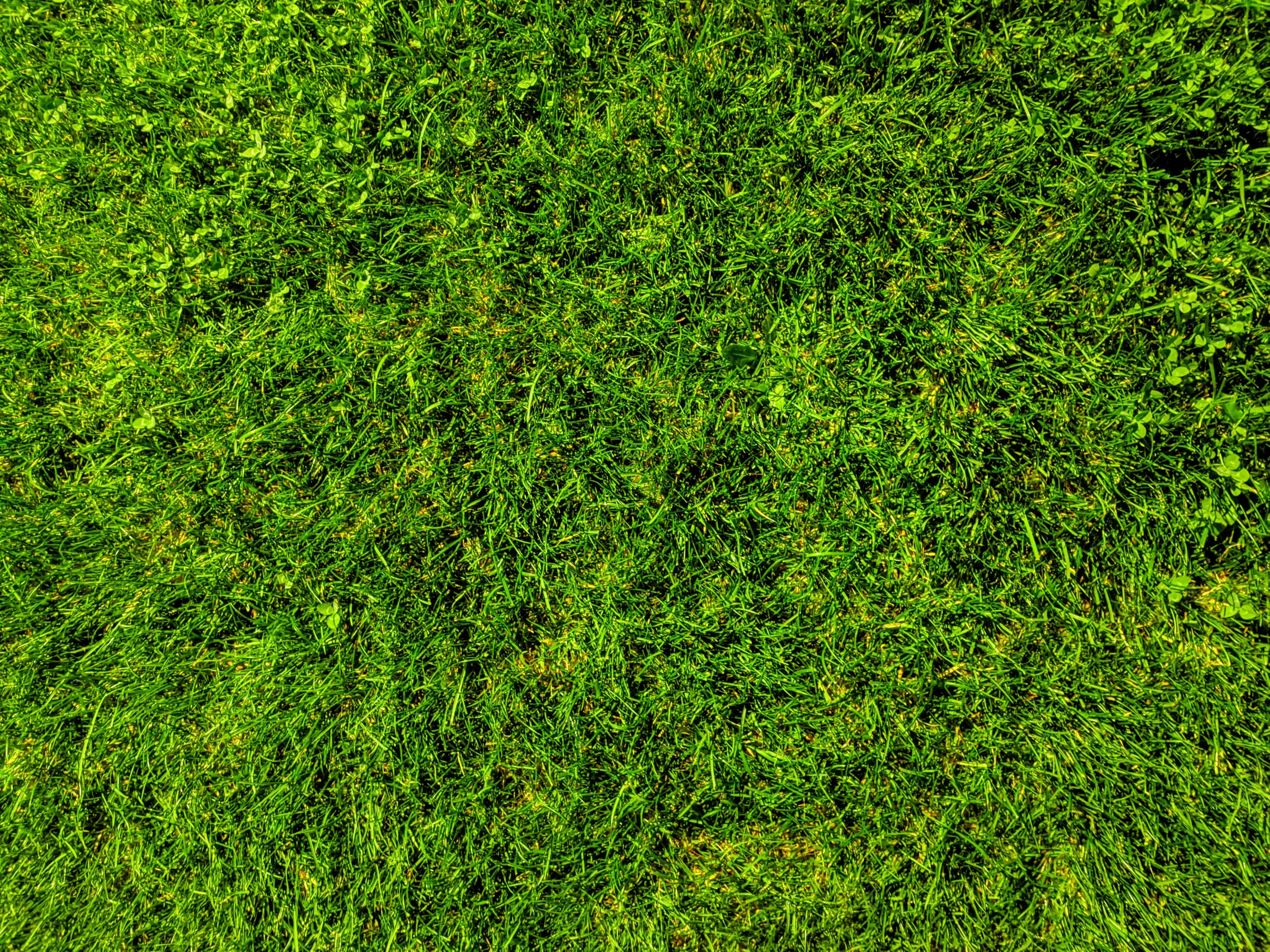
One of the other things we are seeing quite a lot of at the moment are different coloured patches in lawns, usually a day or two after mowing as shown in the picture.
It’s bit unusual to see this happening at this time of year and what we’re actually seeing are indigenous grass species which are grass types that you would naturally find on field margins or grass meadows in the country. Birds feed on the seed from these grasses and then often deposit them on lawns. When conditions are a bit challenging, these grasses are more resilient and therefore they grow more vigorously than the amenity grasses is in your lawn. Hence they grow taller more quickly and they are often a much lighter colour because they haven’t been bred to look like lawn grasses. What we will find when the conditions warm up and become more normal is this manifestation will blend in and you won’t see the patches in the way that you currently do. Because these naturally occurring indigenous grasses are more vigorous than amenity grasses we tend to see this more in very cold conditions at the end of the year or in early spring when they start to grow a bit quicker than the amenity ones.
So now that the weather has warmed up and we’ve lost the cold nights, we are able to apply selective herbicides. These are herbicides that remove weeds without damaging the grass and whilst we are visiting your lawn to top up nutrition we will be applying them. There are a few little bits of Moss still left in some darker places that’s because we had such a long cold damp dull start to the year but these small patches will disappear quite quickly.
As the weather does start to warm up, we start to change the type of nutrition that we are applying. This is to maintain the colour without vigorous growth but at the moment it’s a little bit of a challenge with the constant rain and the cooler temperatures. If it does warm up significantly over the next few weeks we will be looking to move to a liquid based nutrition application this is partly because as it dries we don’t have the soil moisture available for the granular fertilisers to break down and get down amongst the roots.
A little later in the year than normal because of the damp conditions we are now starting to think about aerating soil. This is something that can’t be done when the soil is wet because what we’re trying to do is to actually cause cracks in the soil and these cracks will then widen as the soil dries and shrinks in the same way that you sometimes see cracks appearing in fields or sometimes in flower beds. If we can get these cracks to expand, roots can then penetrate much deeper and we end up with a much healthier soil. Aeration should not be seen as a form of drainage although it will help soil moisture move through the profile better, the main aim is to improve gaseous exchange up and down because there are billions of microbes in the soil under your lawn all of these need to work in harmony to process organic material and fertilisers that we apply so that plants can then thrive but it is all part of a big community and if it’s if there’s not enough air available things don’t work very well at all. If you think you may be interested if you are interested in having a lawn aerated do please drop us a line.