• Skip to primary navigation
  • Skip to main content
  • Skip to footer
  • Home
  • About Us
  • Contact us
07950 334112
Perfect Ground Solutions logo

Perfect Ground Solutions

Lawn Care Treatment, Weed Control & Plant Pest Specialist

  • TopGrass
  • Lawn construction
    • Lawn Construction
    • Soils
    • Buying Soil Guide
    • Grass Types
    • Lawn Seeding Overseeding
  • Lawn care
    • Lawn Care
    • Lawn Maintenance
    • Moss Control & Treatment
    • Scarification
    • Lawn Aeration
    • Lawn Mowing Heights
    • Lawn and Grass Diseases
    • Lawn Pests
    • Lawn Nutrition, Feed and Fertiliser
    • Lawn Care Dictionary
  • Sports Pitches
    • Sports Pitches
    • Sports Pitch Feed and Nutrition
    • Sports Pitch Renovation
  • Weed Control
    • Weed Control
    • Selective Weed Control
    • Hard Surface Weed Control
    • Weed Identification
  • Why choose us?
  • Case Studies
  • Blog
  • About Us
  • Contact us

Lawn pests

Chafer Grub

There are two main species of Chafer Grub that cause problems in turf and sports surfaces. The Garden Chafer (Phylloperthahorticola) and the Cockchafer (Melolonthamelolontha).

The garden chafer is much smaller than the cock chafer with the larvae growing to 15mm in length. The adults are metallic green and bronze and appear in the spring when they lay eggs in the soil. The pupae hatch and feed on grass roots until the autumn when they tend to burrow into the soil to escape the cold, emerging in the spring after pupating as adults.

The cock chafer is much larger, the adults are up to 30mm in length and a brown colour, the larvae are also much larger as they feed in the soil for up to three years.

The main damage is caused by badgers, birds and other animals digging up the soil to reach the larvae.

Chafer Grubs
Chafer Grubs
Chafer Grub close up photo
Chafer Grub close up
Damage caused by birds digging up lawn searching for chafer grubs
Damage to a lawn caused by birds feeding on Chafer Grubs

Leather Jackets

These grubs are the larvae stage of the Crane Fly (Daddy Long Legs). They live in the soil throughout the year before pupating and emerging as adults in late summer. They can cause some damage to lawns by feeding locally on grass roots, but the majority of damage is caused by other animals and birds digging them up.

There are currently no forms of chemical control for this pest in amenity grass. They were all withdrawn in 2016 as part of the plans to make sure bee numbers are protected. We do however have good parasitic nematodes which are naturally occurring tiny worms that eat the pest. We are happy to have a chat about how best you can use this control to help your lawn.
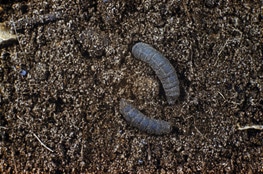
Leather Jacket grubs

Do you have an infestation of lawn pests that you need to remove? Get in touch to find out how we can help you.

Contact us

Footer

Our company

  • Home
  • TopGrass
  • About Us
  • Case Studies
  • Contact us

Sports pitches

  • Sports Pitches
  • Sports Pitch Feed and Nutrition
  • Sports Pitch Renovation

Lawn construction

  • Lawn Construction
  • Soils
  • Buying Soil Guide
  • Grass Types
  • Lawn Seeding Overseeding

Weed control

  • Weed Control
  • Selective Weed Control
  • Hard Surface Weed Control
  • Weed Identification

Lawn care

  • Lawn Care
  • Lawn Maintenance
  • Moss Control & Treatment
  • Scarification
  • Lawn Aeration
  • Lawn Mowing Heights
  • Lawn and Grass Diseases
  • Lawn Pests
  • Lawn Nutrition, Feed and Fertiliser
  • Lawn Care Dictionary

Contact us

4 St Georges Cottages
Wareside
Hertfordshire
SG12 7RU

07950 334112

info [at] perfectgroundsolutions [dot] co [dot] uk

© 2026 Perfect Ground Solutions Privacy Policy